

Remote work has been built on the same promise for years: staying productive regardless of location. But in 2026, something fundamental is shifting. AI agents are taking over tasks that previously only human colleagues could handle. They analyse documents, prepare meetings and contribute to strategic thinking. Not as a passive tool, but as an active participant in the work process. From search function to thinking partner Not long ago, AI was little more than a smart search function for most remote workers. You asked a question and got an answer. That era is over. The current generation of AI agents can maintain context across long conversations, contribute to complex problem-solving and independently execute subtasks. Think of drafting a project proposal based on earlier notes, or summarising customer feedback from dozens of emails. For remote workers, this is a significant leap. Working alone from home often means missing the spontaneous exchange of ideas that happens naturally in an office. An AI agent partially fills that gap. Not as a replacement for human interaction, but as a thinking partner that is always available. Small teams, big impact One of the most striking developments is how AI levels the playing field. A team of three freelancers can now execute tasks that previously required a department of ten. The AI handles data analysis, content creation and planning logistics. The human steers, monitors quality and makes the strategic calls. This makes remote work not only more feasible but also more attractive for small organisations and independent professionals. You no longer need a large office to operate professionally. Technology compensates for what you lack in headcount. Trust and security Yet this shift also introduces risks. When AI agents gain access to sensitive business documents, client data and internal communications, cybersecurity becomes far more pressing. Especially for remote workers operating through home networks and personal devices. Organisations deploying AI for their remote teams need to invest in clear security protocols. Every AI agent needs a well-defined role with limited access rights and transparent logging of how data is used. Trust in the technology starts with containing the risks. New skills for a new era The rise of AI agents also changes what is expected of remote workers. Purely executional work is losing its value. What matters is the ability to set direction, evaluate critically and communicate clearly with both people and machines. Someone who can articulate precisely what is needed will get more out of AI than someone who is technically stronger but less precise in their communication. Upskilling is therefore becoming a necessity, not a luxury. Not just in using specific tools, but in developing judgement and creative thinking. Precisely the skills that AI cannot replicate. The conclusion is straightforward. AI does not replace the remote worker, it redefines what remote work can be. Those who learn to collaborate with AI agents do not become redundant. They become more capable.
- 8 Jul 2026 -
Six years after the Covid pandemic, remote work has become a permanent fixture in France. Around 38% of French workers regularly work from home in 2026, compared to just 7% before the pandemic. The hybrid model of two to three days of remote work per week has become the standard across most service sectors. But behind this apparent stability, a double battle is playing out. Employers are tightening the reins While American tech giants like Amazon, Tesla and Google are pushing their employees back to the office en masse, French companies are taking a more moderate path. Major names like Publicis, BNP Paribas and Société Générale are keeping the hybrid model but structuring it more tightly. Some companies now prohibit consecutive remote work days. Others have reduced the number of remote days from eight to six per month. Still, the overall picture remains largely stable. According to a study by Apec from December 2025, 89% of companies did not change their remote work policies in 2025. And 94% say they have no plans to do so in 2026. The adjustments are more about organisation than volume. Nearly half of managers expect their company to revise remote work rules without actually reducing the number of days. The energy crisis as an unexpected ally The war in the Middle East and the closure of the Strait of Hormuz triggered a new energy crisis in the spring of 2026. The European Commission has since been working on measures to reduce energy consumption, including a proposal to require companies to offer at least one day of remote work per week. The International Energy Agency has included remote work in its list of recommendations to combat the crisis. This creates an interesting tension. The very same companies that want their employees in the office more often are now being asked to encourage remote work. Critics also point out that mandatory remote work simply shifts energy costs from employer to employee. The Tuesday-Thursday economy Whether driven by companies or employees, the result is the same everywhere. Tuesday and Thursday are the busiest office days in France. Friday is by far the most popular remote work day, with nearly half of all remote workers staying home. The French national railway SNCF measures an 18% difference in passenger numbers between Tuesday and Friday. On the roads, the gap is around 16%. This pattern has consequences. Companies are switching en masse to flex-office setups, where employees no longer have assigned desks but book a workspace instead. Offices overflow on peak days and sit empty on Fridays. The challenge for companies is making the quiet days attractive, through networking events, training sessions or wellness activities. Remote work as an acquired right For employees, remote work has become a right they refuse to give up. More than half of French workers say they can no longer do without it. Three quarters of managers work from home at least half a day per week. And 45% of them would resign if remote work were no longer an option. The legal framework is also becoming clearer. Since January 2026, the standard remote work allowance stands at 2.70 euros per day. And a ruling by the Cour de cassation in March 2025 established that using one’s home for professional purposes constitutes an intrusion into private life, making compensation nearly automatic. In France, the question in May 2026 is no longer whether remote work will survive. That debate is over. The question is how companies integrate it sustainably into their operations, in a context where energy is scarce and talent even more so.
- 7 May 2026 -
For several years now, a quiet but significant trend has been taking shape in France: workers are leaving major cities to settle in mid-sized towns or rural areas while keeping their jobs remotely. This movement, made possible by the widespread adoption of remote work, raises a central question: is it genuinely revitalising the communities that have been losing residents for decades?
- 11 Apr 2026 -
Those who still associate remote work with pyjamas and video calls are missing the bigger picture. In March 2026, the International Energy Agency (IEA) officially recommended teleworking as a concrete measure against the escalating energy crisis. It is a remarkable step, one that places the workplace debate in a far broader context than productivity or work-life balance.
- 20 Mar 2026 -
Hybrid work promised us the best of both worlds: the calm of home for focused work, and the office for real collaboration. For many employees, the reality turns out differently. The working day is packed with meeting after meeting, and the actual work keeps getting pushed to the evening hours.
- 26 Feb 2026 -
Hybrid work has become a permanent fixture in our companies. Yet managing a team where some members are in the office and others are at home remains a daily headache for many managers. How do you maintain cohesion when everyone isn’t in the same place? How do you make sure no one feels forgotten?
- 10 Feb 2026 -
On 22 September 2026, London will host the 12th edition of the Wellbeing at Work UK Summit, one of Europe’s leading events on workplace wellbeing. Organised by Sonas Events Ltd, the summit brings together senior leaders from a wide range of sectors — HR, rewards, employee benefits and organisational culture — around a shared mission: […]
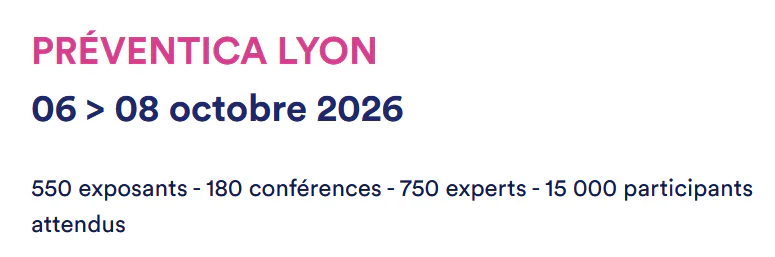
Préventica Lyon is France’s largest event dedicated to health, safety and quality of life at work. This three-day fair has been the reference for all actors involved in occupational risks and employee wellbeing for nearly 25 years. The fair addresses a broad audience: employers, HR managers, prevention officers, occupational physicians, safety coordinators, ergonomists, psychologists, managers, […]

World Summit AI is an international AI conference where leaders from science, industry, startups, investors and policymakers come together to shape the future of artificial intelligence. The event brings together the entire AI ecosystem and is considered one of the world’s most influential AI summits. Goal and focus Program Participants include CEOs, CTOs, […]
World mental health day is celebrated every year on October 10th. The goal is to raise awareness about mental health and the importance of psychological wellbeing in the workplace. For remote workers, this day holds special significance. Working from home can lead to feelings of isolation, work pressure and a blurring of boundaries between work […]
