
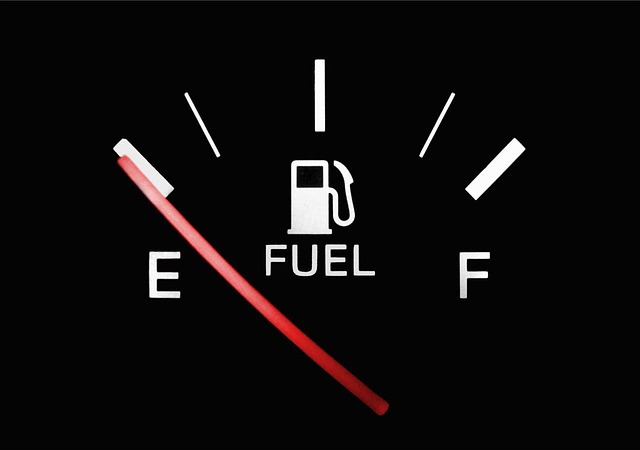
Those who still associate remote work with pyjamas and video calls are missing the bigger picture. In March 2026, the International Energy Agency (IEA) officially recommended teleworking as a concrete measure against the escalating energy crisis. It is a remarkable step, one that places the workplace debate in a far broader context than productivity or work-life balance.
The trigger is urgent. The conflict in the Middle East caused what the IEA described as “the largest supply disruption in the history of the global oil market”. Shipping traffic through the Strait of Hormuz, normally accounting for around 20 per cent of global oil consumption, has come to a near standstill. In response, the agency published a package of recommendations for governments, businesses and citizens. Alongside lower speed limits on motorways and alternatives to air travel, working from home tops the list as a way to reduce fuel consumption.
The logic is straightforward: fewer commutes mean less fuel use. And the effect is far from trivial. Earlier American research calculated that remote workers spend an average of 22 fewer hours in traffic each year, saving around 1,200 dollars in fuel costs. Scaled up to millions of employees, the impact on energy demand and dependency becomes significant very quickly.
What makes this particularly striking is the timing. Just as the IEA is promoting teleworking as an energy measure, many employers are heading in the opposite direction. In Belgium, 16.6 per cent of employers now require staff to be present in the office at least four days a week, a clear rise from 11.4 per cent the year before. Mandatory office attendance is quietly making a comeback, even as international experts call for greater flexibility.
That tension is telling. Employers tend to frame remote work as an HR issue, but the energy dimension forces us to see it as a societal and ecological question too. An employee who leaves the car at home twice a week contributes to less congestion, fewer emissions and reduced energy dependency. These are external benefits that do not show up on any company’s balance sheet, but they are real nonetheless.
There is also a housing dimension. Someone working from home heats their own home during the day. That shifts energy consumption rather than eliminating it. The net impact depends on how energy-efficient the home is, what type of heating is used, and whether office buildings actually reduce their energy use when fewer people are present. A half-empty office that runs its heating or air conditioning at full capacity can quickly make working from home a net-zero exercise in energy terms.
Yet the IEA’s call remains significant. It signals that remote work is no longer just an employee perk or a productivity question. It is a tool within a broader energy strategy, sitting alongside smart thermostats, insulation and electric mobility.
The question businesses and policymakers should ask themselves: if teleworking contributes to energy security, who bears the responsibility for making it possible? And who picks up the energy bill that shifts from the office to the employee?
These are not easy questions. But they are becoming increasingly difficult to avoid.